Discover
Find and follow written work
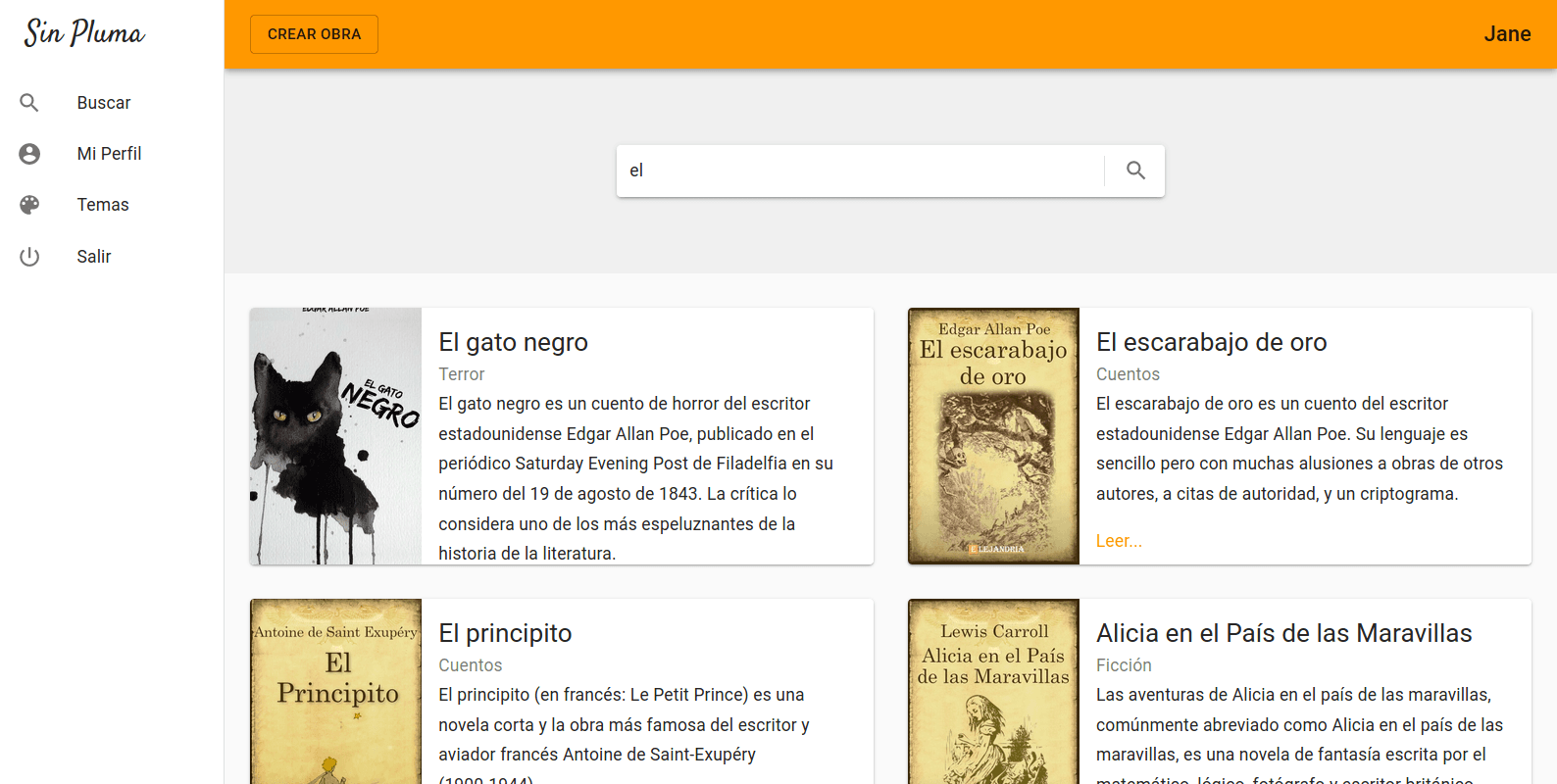
Readers browse works, inspect author profiles and synopses, follow notebooks, and return to structured chapter collections.
An academic writing platform that taught me how satisfying software architecture can be when many separate parts finally work as one system.

Sin Pluma began as an academic project, but it became much more personal to me. Bringing the editor, API, databases, storage, and language service together gave me my first real sense of what software architecture could make possible.
I built the project alone and presented it among more than 40 projects, many made by teams of three students. It placed second and earned the degree recognition reserved for the top three. More importantly, the feeling of seeing every part work together showed me the path I wanted to follow.
Discover
Readers browse works, inspect author profiles and synopses, follow notebooks, and return to structured chapter collections.
Compose
Slate preserves structured page content while React and Redux coordinate editing, navigation, session state, and API activity.
Organize
A clear domain model connects users, notebooks, ordered pages, genres, reading lists, tags, and media without flattening everything into documents.
Analyze
An isolated linguistics service classifies sentence sentiment and returns annotations the editor can display without owning publishing data.
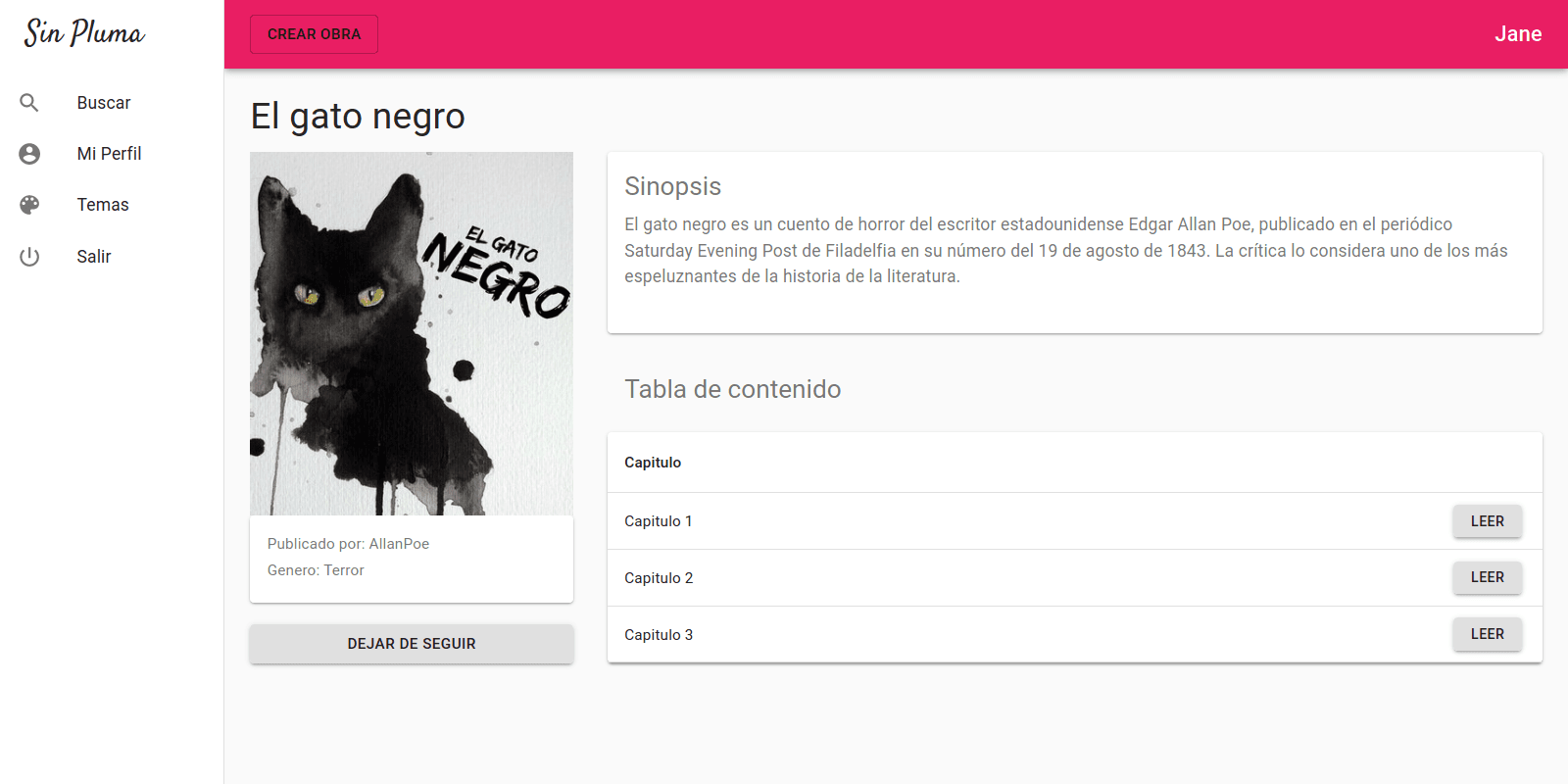
The finished interface gave readers a direct path into the library. They could sign in, search across published works, open a title, and choose a chapter from its table of contents.

The Slate editor works with structured page content rather than a plain textarea. React composes the workspace, Redux holds shared state, and Axios manages authenticated communication with the API.
Explore the frontend engineering →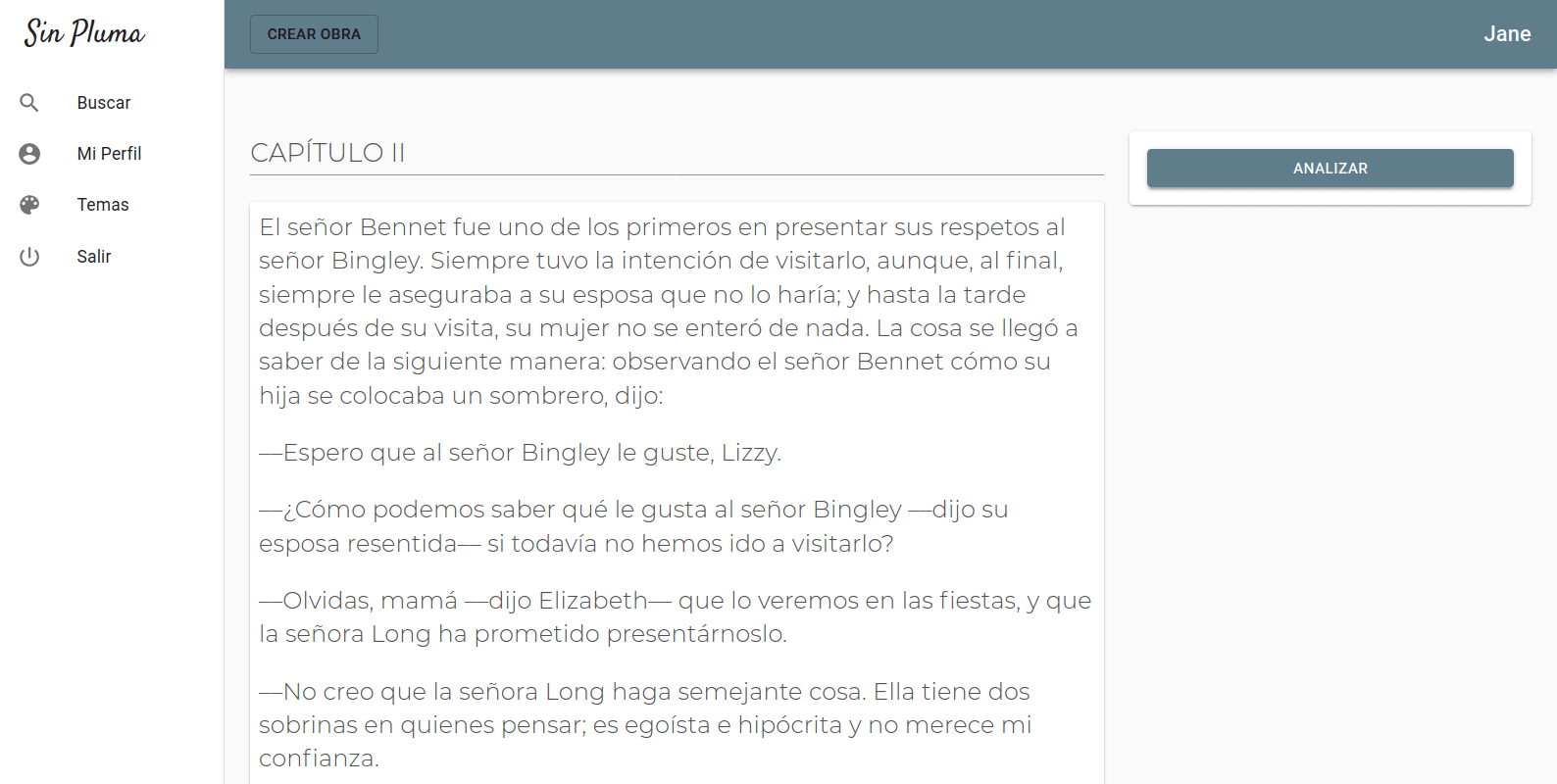
Nginx exposes one public surface and routes requests inward. React owns the browser experience, Flask coordinates business behavior, and the storage layer separates content, objects, and revocation state.
The Flask API owns business rules and validation without knowing whether React, a mobile client, or another interface made the request.
Read the implementation detail →Short-lived access tokens, refresh tokens, an Axios refresh queue, and Redis-backed revocation combine continuity with server-enforced logout.
Read the implementation detail →MySQL owns transactional content, MinIO owns uploaded objects, and Redis owns ephemeral security state instead of forcing one database to do every job.
Read the implementation detail →Three MySQL nodes use Group Replication behind MySQL Router. The API connects to one logical endpoint while the cluster maintains quorum, elects a primary, and brings returning members back into sync.
An idempotent MySQL Shell bootstrap configures the cluster and seeds the schema. Docker volumes preserve data across container restarts, and the application remains isolated from individual database addresses.
High availability
Inspect cluster bootstrapping, quorum behavior, recovery, schema choices, and the production hardening beyond the demonstration.
Read the cluster design →Public, frontend, backend, and cluster networks expose only the connections each container needs. The API reaches the router, not the individual database nodes.
Docker Compose starts the product, supporting services, cluster bootstrap, and routing as a reproducible system rather than a manual list of local dependencies.
The outcome
Sin Pluma connects a useful domain, deliberate service boundaries, secure sessions, specialized storage, and automated high availability without asking readers or writers to think in containers.
Follow the project beyond the landing page. Each publication focuses on one architectural boundary, implementation decision, or operational lesson.
Every service in Sin Pluma, how Docker networks isolate them, the data flows behind key operations, and the design's strengths and limits.
How Sin Pluma's React SPA is built: Redux state, HOC auth guards, Axios interceptors, a Slate.js rich text editor, and backend integration.
How Sin Pluma's Flask API is built: app factory, blueprints, the full endpoint list, Marshmallow validation, and MySQL, Redis, and MinIO.
How Sin Pluma runs a three-node MySQL InnoDB Cluster: bootstrap, automatic failover, schema management, and hardening beyond the demo.
Sin Pluma's JWT implementation end to end: token structure, lifecycle, the Redis blacklist, the Axios refresh queue, and storage trade-offs.